How to evaluate a Greek contractor remotely
You are in London, Berlin, or New York. The building is in Attica. Here is what to ask — and what the answers actually tell you.
There is a particular kind of anxiety that belongs to owning a building in a country you do not live in. You have a property in Attica — inherited, bought, or built by a previous generation — and something is wrong with the roof. You are eleven hundred miles away. Someone has sent you a price. You have no way of knowing whether it is a good one.
The usual advice is to get three quotes. That advice is close to useless here, because three quotes for undefined scope produce three different numbers for three different jobs, and the cheapest one is cheapest because it is the smallest — not because anyone is being generous.
What follows is what we would ask, if we were you. We are a contractor, so read this knowing that we have an interest. But every question below is one we have to answer, and the reason we can publish them is that we would rather compete on these terms than on price.
1. Ask to see the layers, not the finished roof
Every contractor has photographs of completed work. A finished roof is the least informative photograph in construction — it looks the same whether the build-up beneath it was correct or catastrophic. Tiles hide everything.
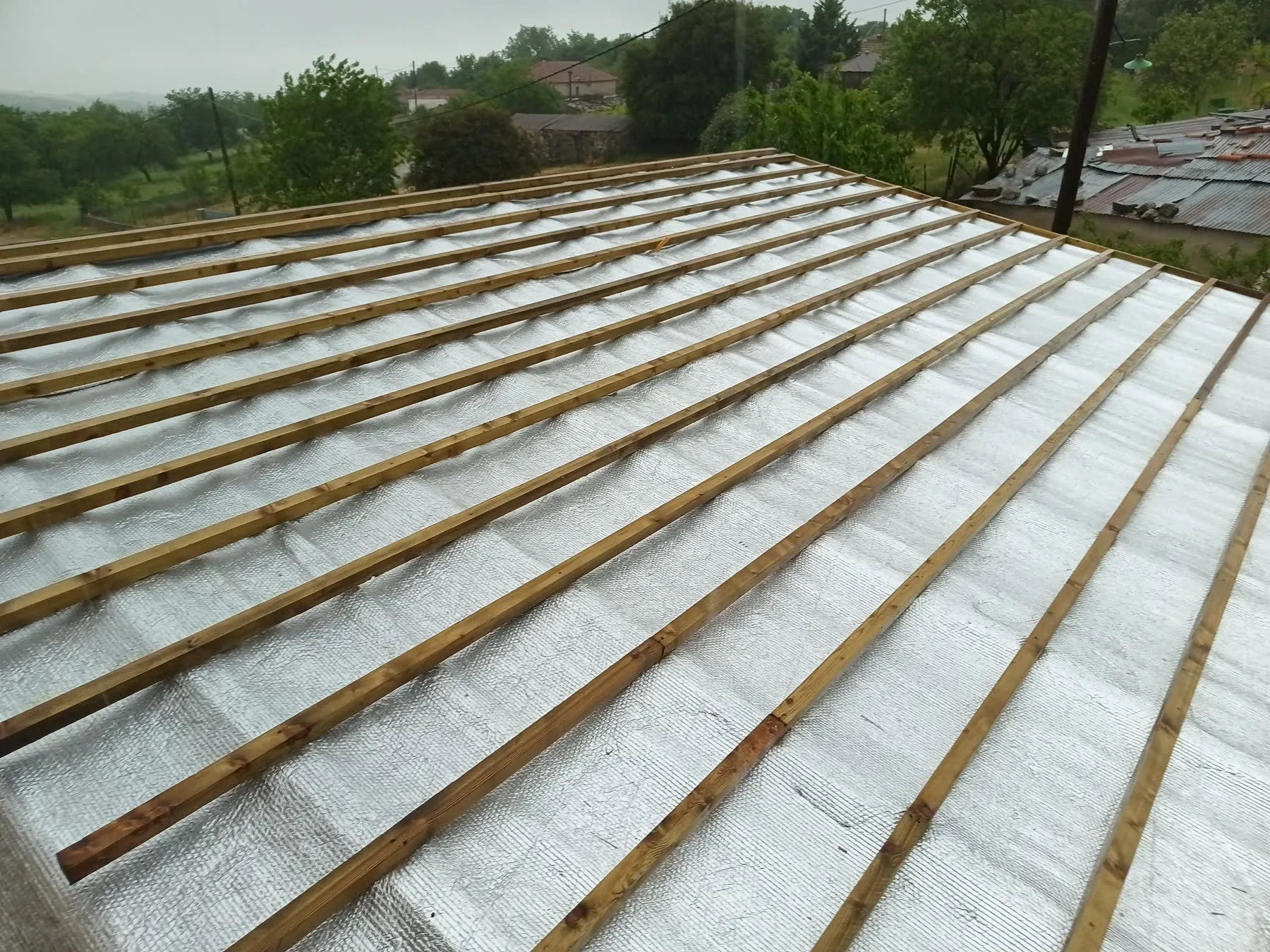
Ask instead for photographs of a job in progress: the deck, the membrane, the insulation, the terminations at the edges and around every penetration. This is the work that gets covered within a day and never seen again, and it is the work that determines whether the roof performs.
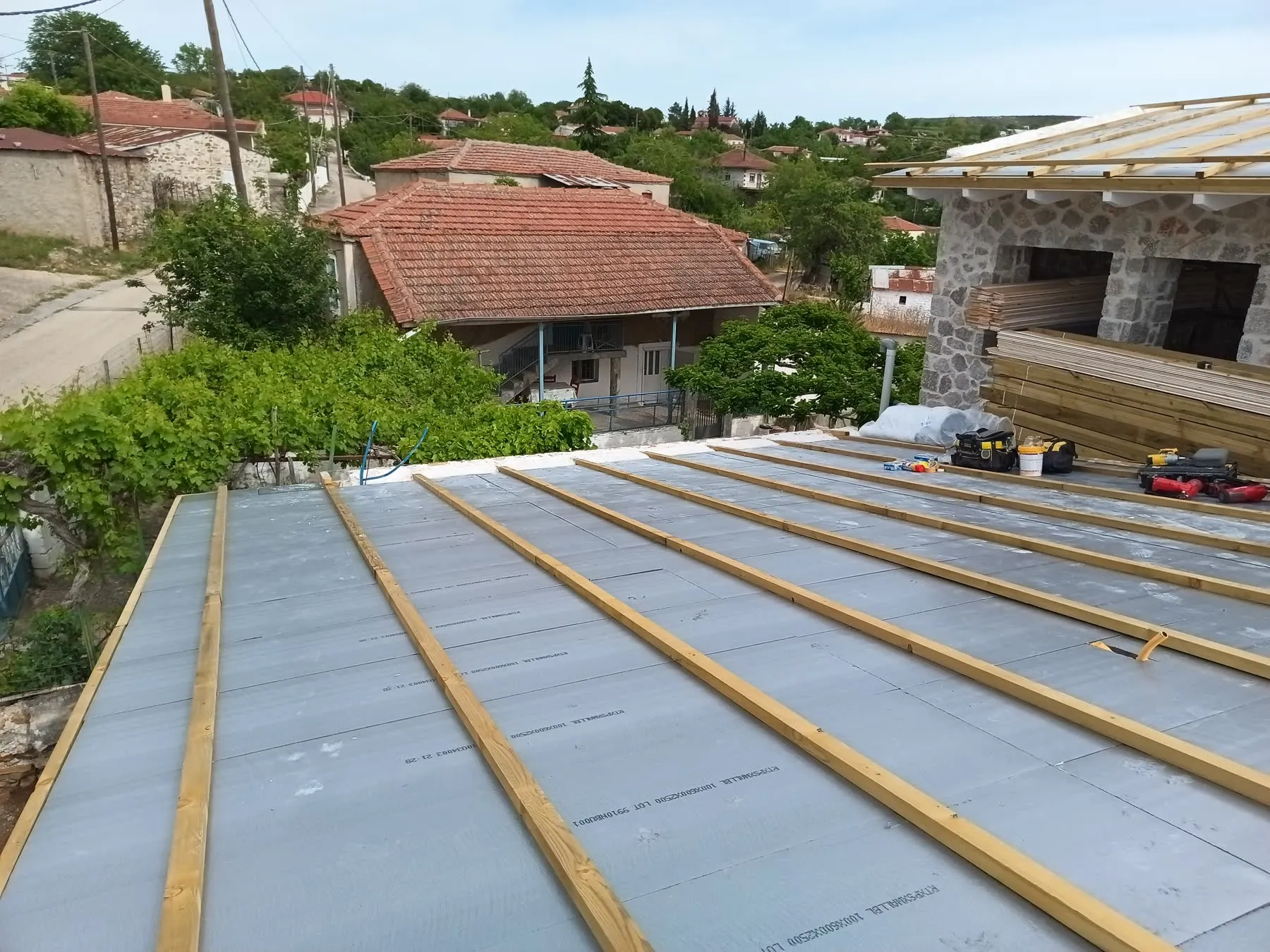
If a contractor cannot produce these photographs, there are two possibilities. Either they do not document their work, which means you will never be able to prove what is up there. Or they do document it and would prefer you did not look. Neither is a reason to proceed.
A roof outlives its contract. The record of how it was built should outlive it too.
2. Ask what they refuse to do
This is the single most revealing question you can ask, and almost nobody asks it.
A contractor who does everything is a contractor who has never had to define a standard. Ask directly: what work do you turn down? A serious answer sounds like a boundary — specific categories, with reasons. A weak answer is some version of "we can handle anything you need," which is not confidence. It is the absence of a threshold.
Follow it with the harder version: tell me about a job you walked away from. Anyone who has held a standard for more than a few years has lost money defending it, and will generally tell you the story without much prompting. Anyone who has not will change the subject.
3. Ask how the price was produced
Not what the price is — how it was arrived at. A number given before anyone has stood on the roof is a guess wearing a suit. It is also the mechanism by which a job doubles in cost halfway through: the guess was wrong, the scope "expanded," and you are asked to absorb the difference on work you believed was priced.
A proper proposal describes method, materials, sequence, and exclusions. The exclusions matter most. What is not included should be written down, in the same document, in the same size type. If it is missing, ask for it in writing before you agree to anything — and notice how the request is received.
4. Ask who is actually going to be on the roof
In Greek construction the person who prices the work is frequently not the person who does it, and the crew who arrive may be assembled that week. Ask plainly: is this your own crew, or is it subcontracted? If subcontracted, to whom, and who supervises them?
Then ask the question people find awkward and should not: is everyone formally employed and insured? Much of this trade still runs on informal cash and no papers. That is not only the contractor's exposure. If someone is injured on your property without cover, it becomes yours. From another country, you will find that out slowly and expensively.
5. Ask what happens when they find something unexpected
They will. Roofs conceal their history — previous repairs, previous compromises, rot that only appears when the tiles come off. The question is not whether surprises occur but what the contractor does in the ten minutes after finding one.
The answer you want describes a process: work stops, the finding is photographed, you are contacted with options and costs, and nothing proceeds until you decide. The answer you do not want is "we handle it" — because handling it without telling you is exactly how a bill arrives at the end containing work you never approved.
6. Use a video call, and use it properly
Thirty minutes on a video call will tell you more than a month of emails, but only if you use it for the right thing. Do not use it to receive a pitch. Use it to watch someone think.
Share whatever you have on screen — listing photographs, an engineer's report, a plan, or just the address on a map — and ask what they can see. A competent contractor will tell you three things: what the images suggest, what they cannot determine remotely, and what would have to be checked on site before anyone commits to anything.
That middle answer is the one that matters. Someone willing to say "I don't know yet, and here is why" on a first call is someone who will tell you the truth later, when it is more expensive to say.
What should worry you
A price per square metre quoted over the phone, before anyone has seen the building. Two buildings with identical footprints can carry completely different work depending on pitch, access, existing structure, and what the last contractor left behind.
Pressure on timing — a discount that expires, a crew that is "available only this month." Serious contractors are busy and say so. Urgency is a sales instrument, not a scheduling fact.
A guarantee that sounds too long. Twenty-year promises are common and largely meaningless: they depend on the company still existing, and on nobody else walking on the roof in the meantime. Materials move — heat, cold, expansion, contraction — and other trades leave damage that looks like the roofer's. Anyone promising perfection for decades is selling you a sentence.
And reluctance to put things in writing. Every question above should be answerable in a document. If the answers only ever arrive verbally, you have nothing — and at this distance, nothing is what you will be left holding.
The short version
Ask for the concealed work. Ask what they refuse. Ask how the number was built and what it excludes. Ask who will be on the roof and whether they are insured. Ask what happens when something unexpected appears.
You are not trying to become a roofing expert from another country. You are trying to find out whether the person you are speaking to has a method — because if they do, the details will take care of themselves, and if they do not, no amount of supervision from abroad will help you.