Five domains.
Done at one standard.
Roof Energy is a premium specialist operator in five domains of building construction. We do these five things at a very high standard. We do not do everything else — and the second half of that sentence is the part most contractors leave out.
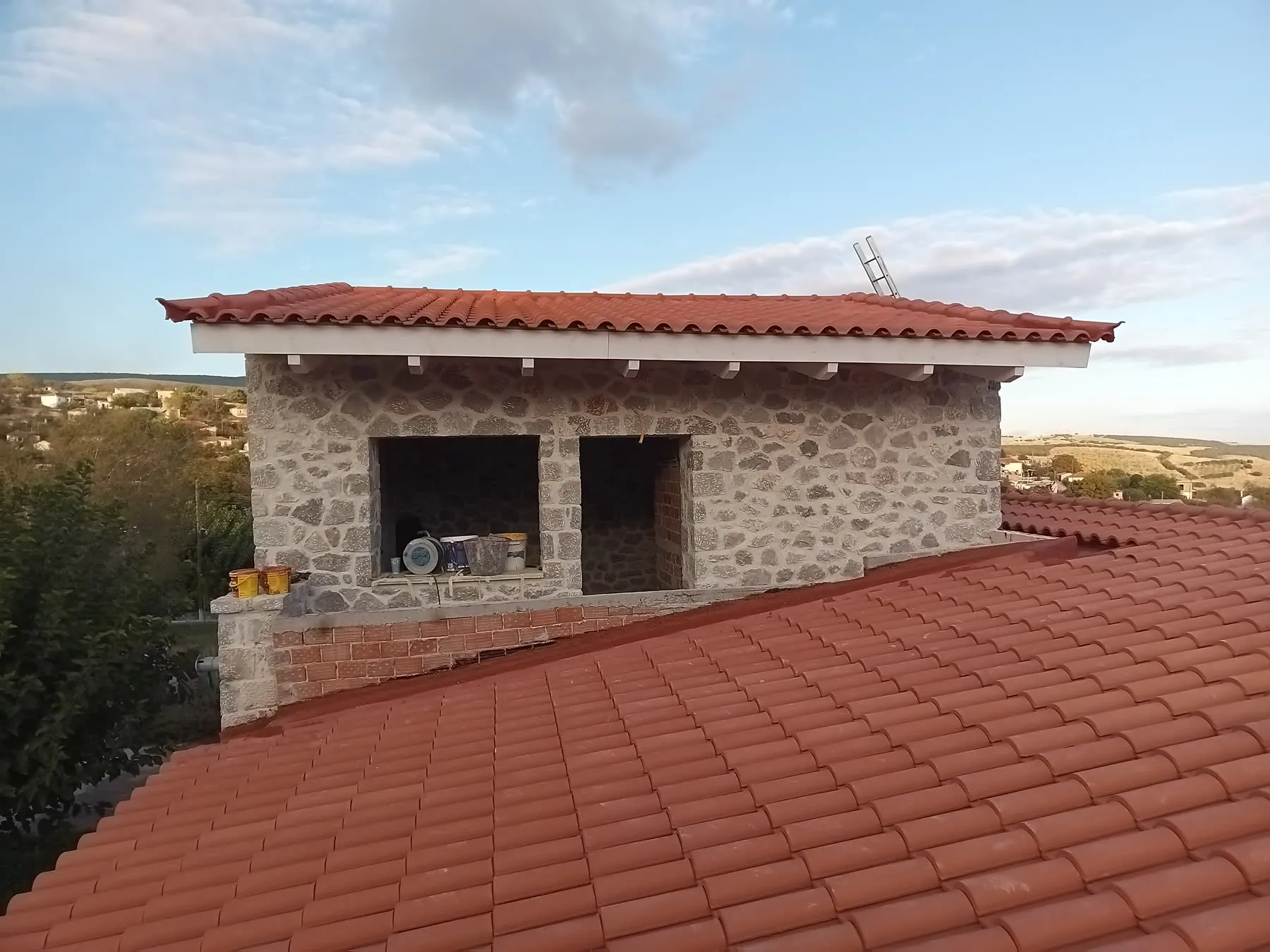
Roofing and roof structure
Pitched roof systems, complete roof reconstruction, and the structural work underneath them.
This is the origin of the company and still its centre. We build new energy roofs on sloped concrete, replace failed roofs entirely, and reconstruct roof structures where the original geometry was wrong rather than merely worn. On a reconstruction we will say so plainly when like-for-like replacement would repeat the original mistake.
The stratigraphy is the work. Sarking-method construction, double timber framing that holds insulation like a sandwich, and a continuous thermal envelope with no interruptions — the layers that get sealed away and never seen again are the ones we photograph most carefully.
Complete roof reconstruction · new energy roofs on sloped concrete · roof-structure strengthening and replacement · Italian and Roman tile systems · GL24 engineered timber · roof windows · concealed guttering on complex geometry.
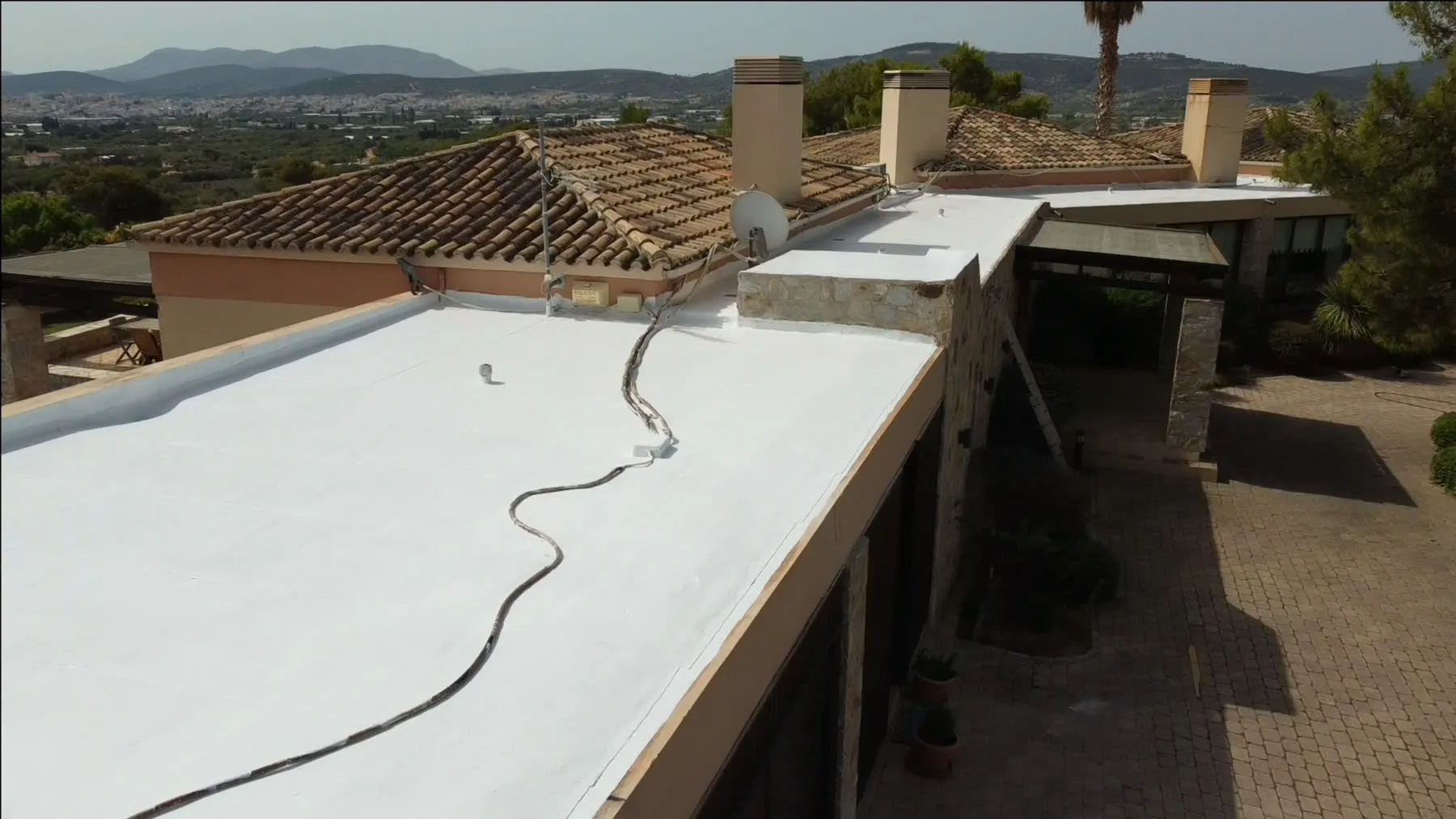
Waterproofing and sealing
Flat roofs, terraces, and the remedial work that follows somebody else's failure.
Most waterproofing calls arrive after a leak, which means the visible damage is downstream of the actual fault. We find the fault. A patch placed over a symptom is not a smaller service than a proper repair — it is a false promise with our name attached, and we decline that work.
Terraces over habitable rooms carry the highest consequence in this domain, and we treat them accordingly: full build-up, correct falls, terminations detailed rather than improvised, and a water test before anything is covered.
Terrace and flat-roof waterproofing · asphalt membrane systems · liquid-applied systems including Hyperdesmo · thermal-and-moisture terrace build-ups · remedial sealing over stone and tile · water testing before cover.
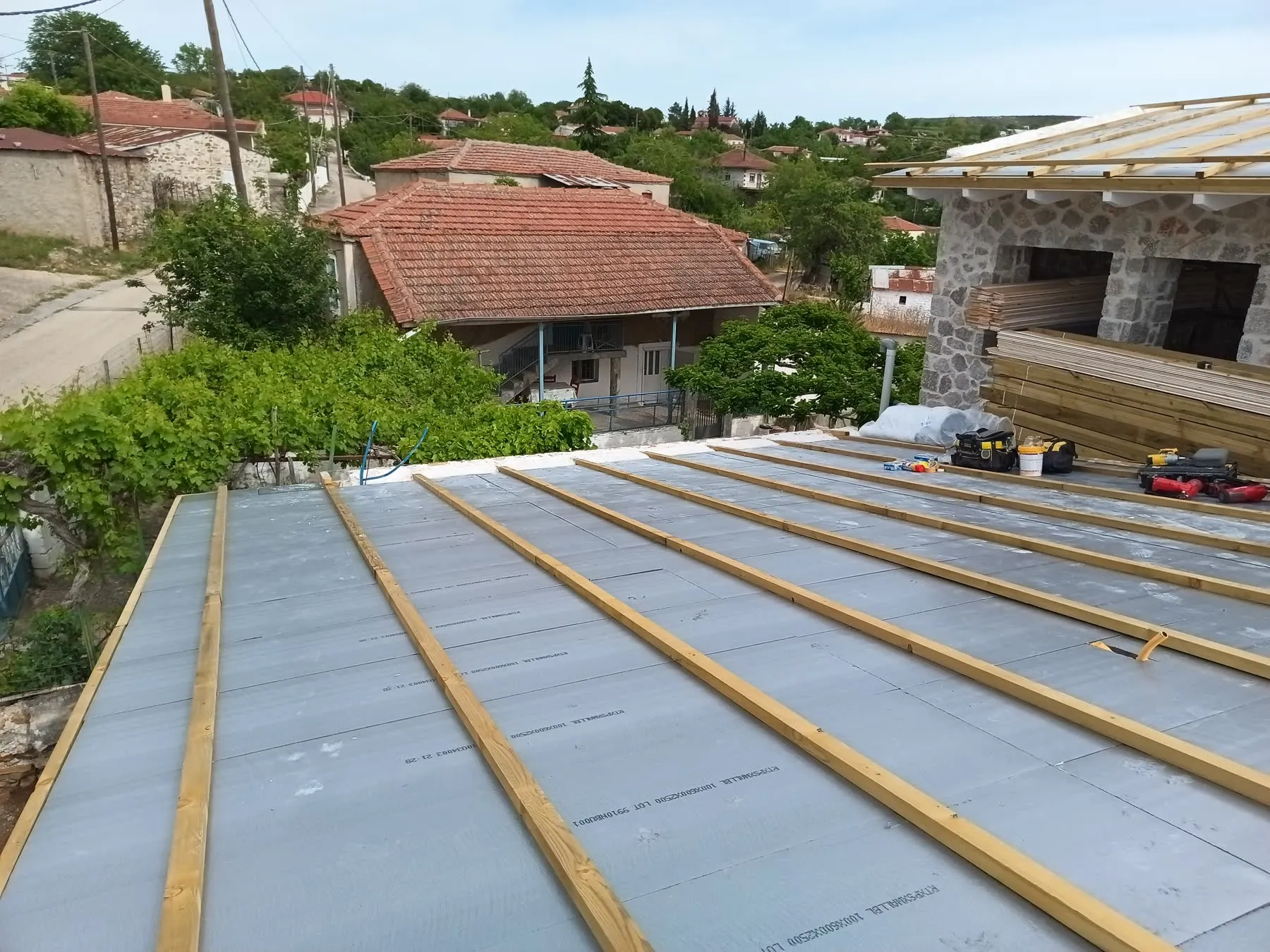
Insulation and thermal upgrade
Energy upgrade of the building envelope, and thermal façade work where the project fits our method.
A roof that keeps water out but lets heat pour through it has solved half a problem. Energy upgrade is not an add-on to roofing here — it is the reason the method changed. The thirty-year-old Greek practice of placing insulation between the tile battens works, to a degree. Continuous insulation works properly.
We take thermal façade and external wall insulation selectively, when the project fits our standards and our method discipline. That selectivity is deliberate and we will explain the reasoning rather than quote around it.
Continuous thermal envelope construction · roof and terrace thermal upgrade · thermal façade and external wall insulation (selective) · energy upgrade of existing roofs without full reconstruction where the structure permits.
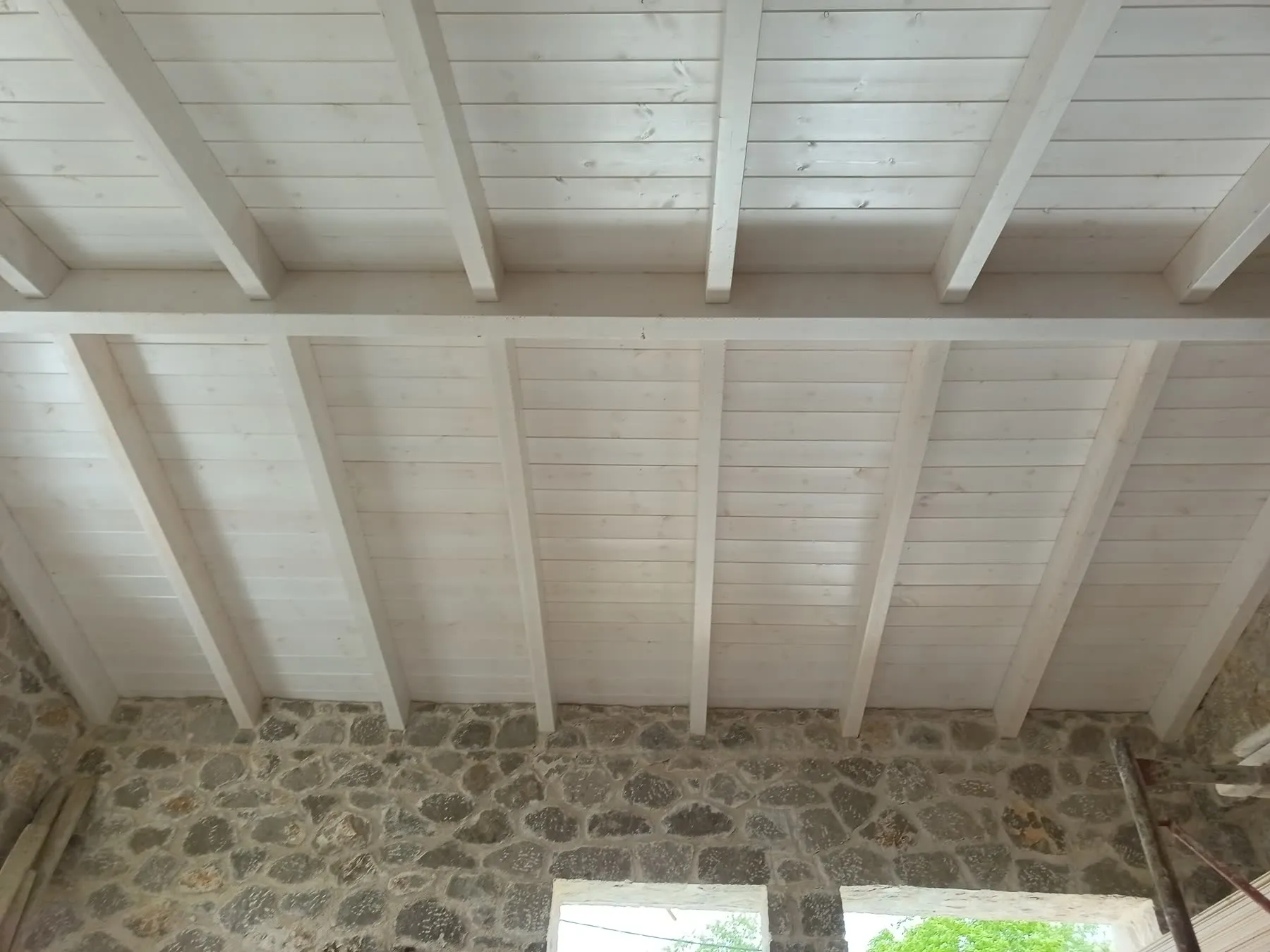
Timber and carpentry
Structural and visible timber for roofs, pergolas, and selected exterior structures.
Where timber will be seen every day by the people living beneath it, structural correctness is the floor, not the standard. Exposed frames and decking are finished closer to furniture-making than to construction — dovetail joints, engineered laminated timber, varnish systems chosen for the exposure they will actually face.
Pergolas and premium outdoor structures belong here for the same reason. They are visible, they are weather-exposed, and the joinery is the entire product.
Exposed structural timber · engineered laminated timber (GL24) · dovetail jointing · pergolas and covered outdoor structures · polycarbonate and fabric-covered systems · varnish and protective finish systems · internal timber detailing and concealed gutters.
Selected exterior building systems
High-liability envelope work we take on when we can defend the method, the scope, and the result.
This domain exists because some projects do not fit neatly into the four above, and refusing them would be wrong. It also exists to be honest about a boundary: we take this work selectively, and the selection is not about difficulty. It is about whether we can technically defend it, price it correctly, document it clearly, and execute it without degrading the standard.
If a project fails any of those four tests, we say no. That answer is given early, with the reasoning, rather than discovered halfway through the job.
Selected repair, strengthening and replacement where the scope is technically clear · supporting construction required to deliver a complete envelope outcome · project coordination where we are controlling quality and risk around our own defended scope.
What we don't do
We do not take generic interior renovation, electrical work outside our envelope scope, broad plumbing or HVAC contracting, full-building MEP packages, unrelated earthworks, or commodity material resale. We are not a general contractor for every category, and we are not a merchant.
This is not modesty. A company that claims every trade cannot be held to a standard in any of them. Naming the boundary is what makes the work inside it defensible — and it means that when we say yes to a project, the yes carries weight.
Start from the symptom
Is water getting in?
Start with waterproofing. The visible damage is almost never where the fault is, so the first job is finding the actual entry point rather than covering the stain.
Is the building cold, or expensive to heat?
That is insulation and thermal upgrade. Often it is a roof problem wearing an energy-bill costume — the envelope is interrupted somewhere and the heat is leaving through it.
Is the structure aging or failing?
Roofing and roof structure. If the roof is old enough to worry you, the question is not whether to repair it but whether repairing it would simply repeat the original design.
Do you want to add outdoor living?
Timber and carpentry. Pergolas, covered structures, and exposed timber work where the joinery is the product and will be looked at every day.
If none of these fit, write to us anyway and describe the building. We will either tell you which domain it belongs in, or tell you honestly that it is not our work — and, where we can, who it does belong to.
If your roof needs attention, start with a site visit.
We arrive with instruments and leave with a written scope. That's the first step — not a price.
Contact Roof Energy